A stage on the mountainside
What is a mayen?
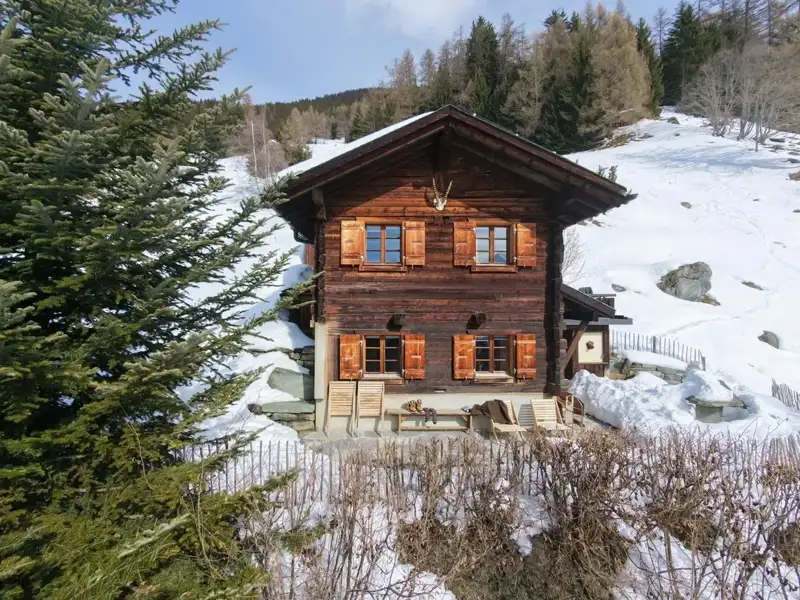
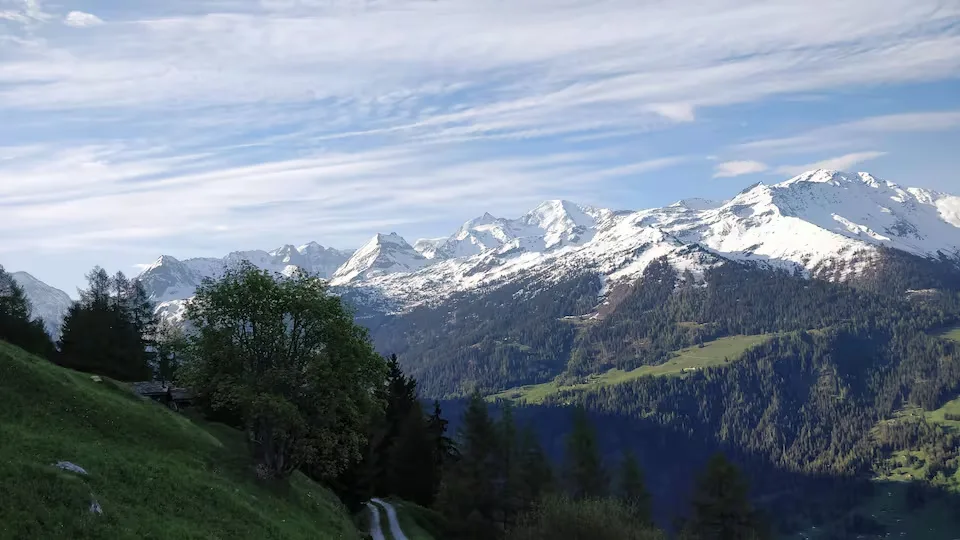
Above Sarreyer, the mayens are scattered at roughly 1,300 to 1,900 metres. They occupy an in-between territory: above the village, yet below the high summer pastures.
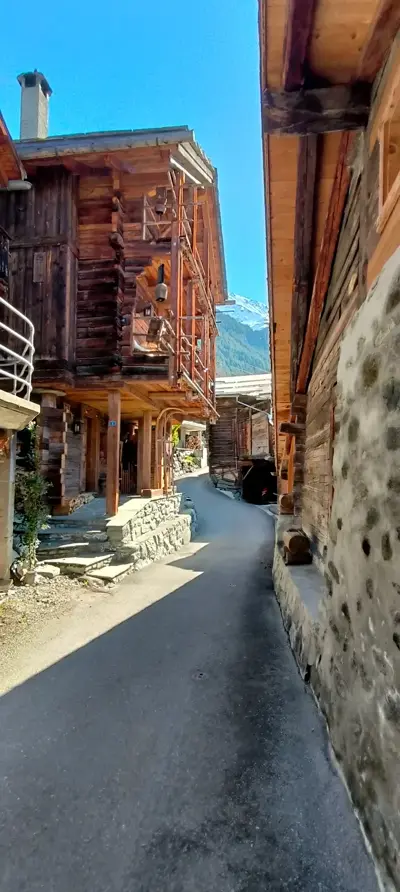
Traditionally, families and livestock stopped here as the seasons changed. A single building often brought living quarters, farm and stable beneath one roof. Timber met stone in an architecture shaped simply for work and for staying close to the animals.
A heritage still in use
Neither museum nor backdrop
Sarreyer's mayens do not belong only to the past. Some still open for the summer, while others are occupied throughout the year. Several have been carefully restored, sometimes welcoming a new generation of mountain dwellers and visitors.
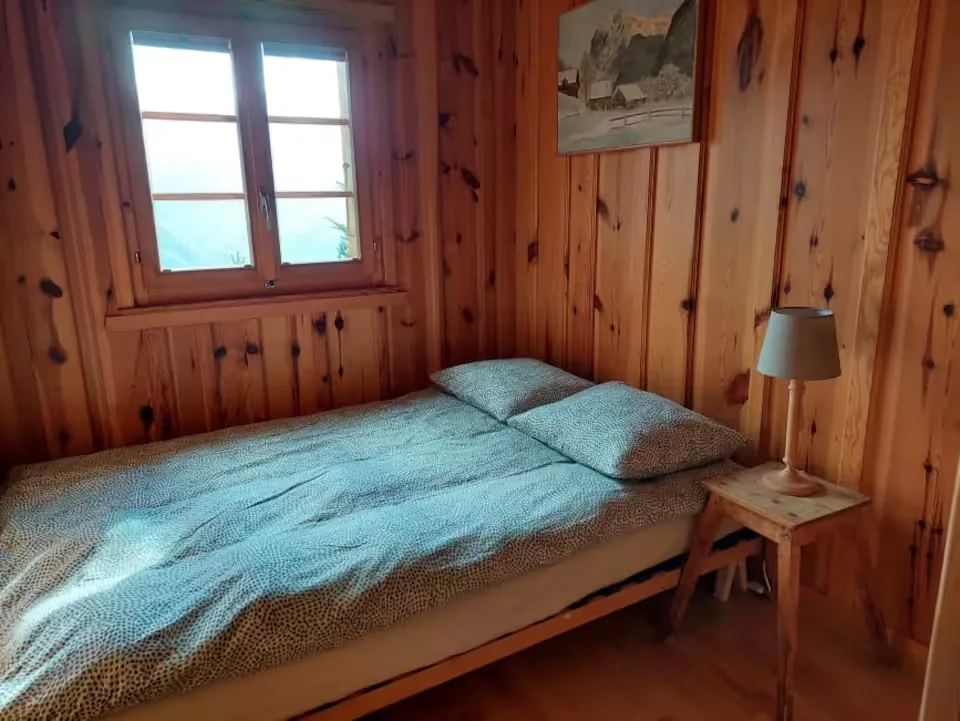
Their uses have broadened. People come to live outdoors, spend time together, or work remotely for a few days. Comfort differs from one building to another: some mayens remain deeply rustic, while others combine self-sufficiency, warmth and modern amenities. That variety is part of the landscape.
Water, wood and the consortage
Resources held in common
Here, water is more than turning on a tap. Traditionally, a spring and its network are maintained collectively through a consortage. Each owner concerned takes part in a shared system of rights, responsibilities and care for a precious resource.
Wood completes this balance. It warms the buildings and recalls a basic truth of life at altitude: comfort comes from nearby resources, and from using them thoughtfully.
Half a day among the mayens
The Schlérondes loop
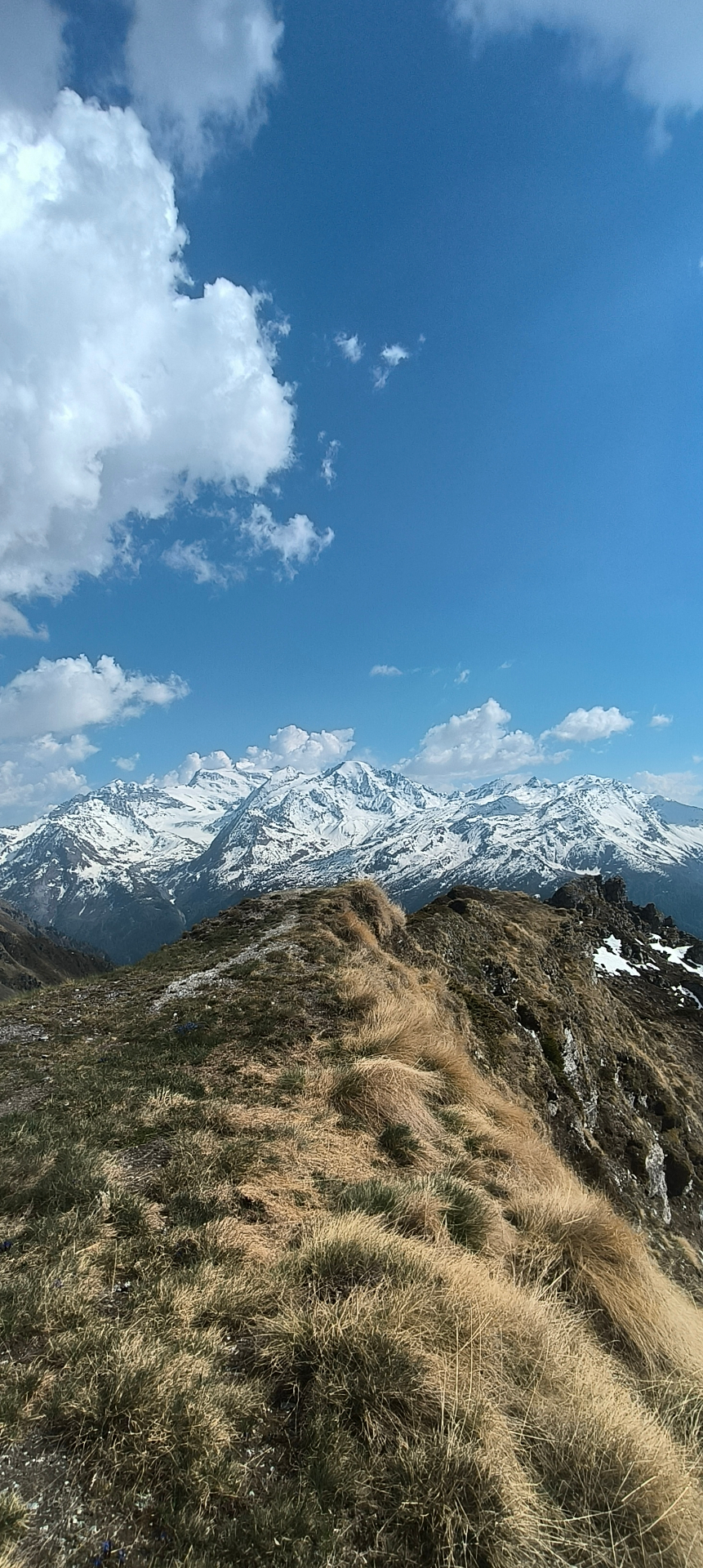
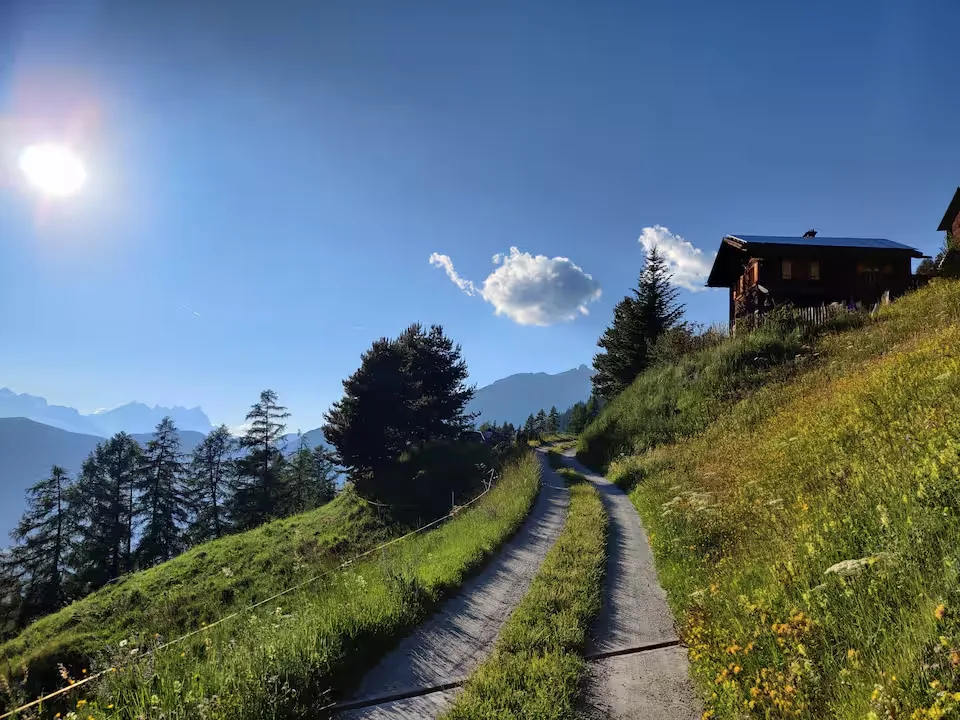
Starting from Chemin du Clévy, the Schlérondes loop is a direct way into this landscape. The path gradually gains height to reach a 360° panorama, before passing a simple picnic spot beside the stream.
The walk also touches the world of mountain plants cultivated in Sarreyer by Les Simples and Isabelle Gabioud. It is a natural meeting of walking, local knowledge and what grows on these slopes.
Down to Sarreyer
Returning to the village
The descent leads back towards Sarreyer's roofs and lanes. The village is never very far away, yet the contrast with the stillness of the mayens feels like returning from somewhere else.
The Café du Mont-Fort makes a natural ending to the walk: a pause in the village, with the eye drawn back up towards the slopes just crossed.
A mayen for today
Le Gypaète
Le Gypaète is one of these restored mayens. Its timber and stone shell keeps the spirit of the place, while solar panels, consortage-managed spring water and a soapstone stove allow it to operate independently.
It is not the only way forward, simply our way of giving an old building a future without erasing its connection to the mountain.
Only a short distance from Verbier, Sarreyer's mayens remain a world apart: a preserved mountainside, inhabited with care, where the Alps are never merely a backdrop.